
 By
By 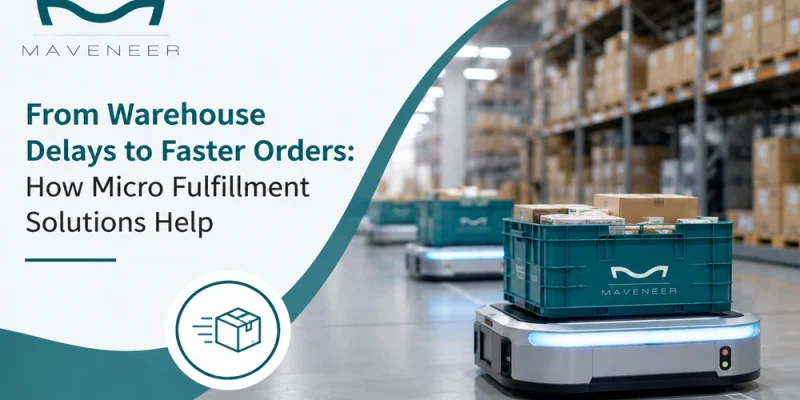
A customer clicks on “Place Order” and hopes that the package flies fast. However, that one simple action is underpinned by a multitude of processes including inventory, picking and packing, and delivery functionalities. It means that even the best executing company can be bogged down when their products are kept distant from customers.
This is why the rise of micro fulfillment solutions. They reduce the distance between inventory and order processing to the end customer that buys your products.
The Secret Expense of Protracted Shipping Ways
The problem is that traditional fulfillment tends to lean on massive warehouses outside of major cities. Now, these facilities can stock up a lot; however, distance becomes an issue.
A parcel can travel for hours before it arrives in the final delivery zone. Not only can this raise the cost of transportation, but it also creates a greater challenge in executing same-day delivery.
This presents a pretty obvious challenge for companies competing on delivery speed: how do you get orders to customers faster without building one enormous warehouse in every region?
One of these answers is micro fulfillment.
A More Compact Facility with a Specific Role
It’s better for businesses to operate more smaller fulfillment locations closer to where demand is, rather than all one large distribution center.
That allows these facilities to concentrate on high-demand products and local orders. Inventory no longer needs to go from one side of a city/region before reaching their customer.
The basic idea is simple:
Store close → process fast → deliver early
This model can serve companies with strong online sales in targeted areas very well.
The Pockets Where Most Growth Can Occur
The advantages of micro fulfillment solutions go beyond the speed of delivery. A good setup can enhance many aspects of the order process.
Shorter Last-Mile Trips
The last mile of delivery is around the costliest part of fulfillment. Localizing a facility can significantly cut down the distance driven by delivery vehicles.
Better Response to Local Demand
Companies can then use this data to stock the products most in demand by customers in that region. That enables a more responsive inventory planning.
Support for Faster Delivery Options
When inventory is closer to the customer, this makes same-day and next-day services much easier.
More Efficient Urban Operations
Instead of a large warehouse outside the city, eCommerce companies can invest in fulfillment sites that fit into smaller spaces inside or near densely inhabited areas.
Technology Makes the Model Work
Location alone is not enough. In many ways, micro fulfillment solutions use technology to get inventory and orders in sync.
Inventory management software allows you to identify stock levels, and automated machinery can help with picking and sorting. From the right point of manufacturing to promising delivery with real-time capabilities, order management systems can also help guide each purchase to the optimal fulfillment source.
The idea is to mitigate steps in vain, while preserving accuracy of inventory.
Before Making the Investment
This model should not be selected just because speed of delivery is appealing. Start by looking into order volume, customer locations, types and sizes of the products to be stored, and operating costs.
Large distribution centers and smaller local facilities can be part of a strong fulfillment strategy. The right combination ultimately depends on how and where a business sell.
Turning Proximity into an Advantage
Micro fulfillment solutions have transformed the way businesses approach inventory placement. The emphasis is not just on how much stock a company can hold anymore. But it then also becomes the speed with which that stock can reach the customer.
With increasing delivery expectations, businesses can no longer afford to store inventory far away from demand − the right inventory in closer proximity helps create a faster and more flexible fulfillment network.










Comments