
 By
By 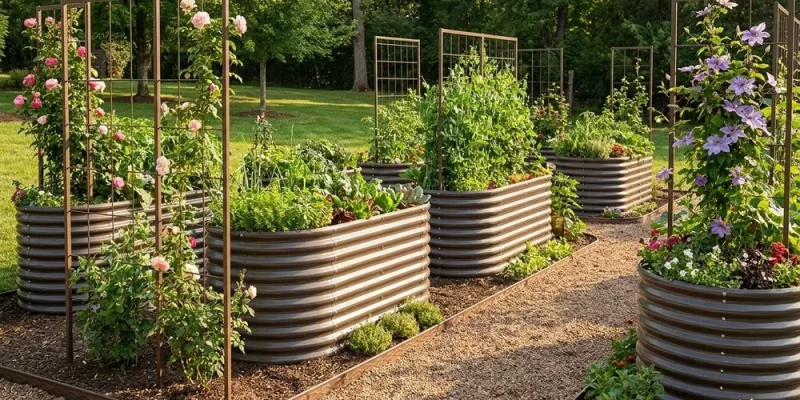
Wooden raised beds rot in three seasons. Plastic planters crack after one hard winter. And that painted metal pail from the big box store? Rust spots by June. If you’ve run that replacement cycle more than twice, you already know the answer before you even ask the question. Galvanized steel containers outlast every budget alternative, and on a working homestead or active garden, that lifespan difference is money you keep.
This isn’t a knock on wood or plastic for every application. Each material has its moment. But when you’re talking about outdoor use, repeated contact with soil and water, temperature swings from January frost to August heat, and zero patience for weekend repair projects, galvanized steel belongs in a category of its own. Here’s why.
What “Galvanized” Actually Means for Your Gear
The process is straightforward: steel is submerged in a bath of molten zinc, which forms a metallurgical bond with the base metal. This isn’t a surface coating you can chip off with your thumbnail. The zinc becomes part of the steel itself, fusing into multiple distinct layers. Hot-dip galvanizing is the gold standard here, and the reason it matters is simple chemistry.
Zinc is more electrochemically reactive than iron. So when the coating faces moisture, it sacrifices itself first, corroding in place of the steel underneath. That mechanism is called cathodic protection, and it means even a scratch or a small nick in the surface doesn’t expose your container to immediate rust. The zinc surrounding the damage keeps doing its job.
According to data published by the American Galvanizers Association, hot-dip galvanized steel provides maintenance-free longevity for decades and generally corrodes at a rate of 1/30 of bare steel in the same environment. For a garden tub sitting on your back porch through Minnesota winters, that ratio means the difference between replacing it in five years and never thinking about it again.
The American Galvanizers Association’s longevity data also notes that hot-dip galvanized structural steel provides 72 to 73 years of life to first maintenance even in the most corrosive industrial atmosphere. Containers used in garden or farm settings face far milder conditions, so that figure puts a realistic ceiling on “how long will this last” conversations.
The Homestead Case: Where Galvanized Steel Actually Lives
Walk any working small farm in the Midwest and you’ll see it everywhere. Feed buckets. Grain storage cans. Watering troughs. Seed-starting flats. The material shows up constantly because it solves a specific problem farmers have always had: they need equipment that handles rough treatment without becoming a maintenance project itself.
Almost anything on a farm or agricultural operation can put galvanized steel to use, including tractor parts, trailers, irrigation systems, fencing, tools, animal pens, barns, and storage facilities. For small-scale homesteaders who don’t have a facilities crew on call, that versatility is the whole argument.
Picture this: you’re running a fall seed-starting operation on a 10-by-12 back porch in rural Wisconsin. You’ve got flats of kale and spinach pushing into October. You need containers that hold moisture consistently, survive being dragged across concrete, and don’t leach anything concerning into your soil. A galvanized steel tub handles all three. You’re not buying liners, painting rust patches, or hauling splintered wood to the curb. The container just works, season after season.
That’s the scenario most product comparisons skip. They measure cost at the register. They don’t measure the labor hours you won’t spend on maintenance over a decade.
Garden Applications: More Than Just a Pretty Patina
The aesthetic pull of galvanized steel in garden settings is real. That silver-grey finish reads as both rustic and modern depending on the context, and it ages in a way that looks intentional rather than neglected. But leaning too hard on the style angle misses the practical argument.
Galvanized containers used as raised beds or planters deliver a specific set of performance advantages that wooden alternatives simply can’t match. They don’t rot. They don’t warp after wet springs. They don’t become a termite hotel. And they heat up slightly faster than soil-only beds in early spring, giving cool-season crops a head start that wood beds can’t offer.
The material question that comes up most often is zinc leaching. The honest answer: at normal soil pH levels, it’s a non-issue. Studies have shown that the risk of zinc and other metals leaching from galvanized steel into the soil is minimal, and the amount of zinc that does leach is often lower than what naturally occurs in soil. Hot-dip products hold their coating far longer than electroplated alternatives, so sourcing quality matters.
That’s where choosing a high-quality galvanized steel manufacturer with decades of proven production standards makes a practical difference, not just a marketing one.
The Homestead Durability Decision: A Material Comparison
Here’s how the main container materials stack up across the factors that actually matter on a working property. This framework is based on real-world behavior, not manufacturer claims.
| Material | Rust/Rot Resistance | Typical Outdoor Lifespan | Maintenance Need | Soil/Water Safe |
|---|---|---|---|---|
| Hot-dip Galvanized Steel | Excellent (cathodic protection) | 25 to 70+ years | Very Low | Yes, at normal pH |
| Untreated Wood | Poor | 3 to 7 years | High (seal, replace) | Yes, but degrades |
| Painted Steel | Moderate (depends on paint) | 5 to 12 years | Medium (touch-up) | Depends on coating |
| Plastic/Resin | Good (no rust) | 5 to 10 years (UV degrades) | Low to Medium | Yes (food-grade only) |
| Pressure-Treated Wood | Moderate | 10 to 20 years | Medium | Concerns with older treatments |
The table makes one thing obvious: galvanized steel wins on longevity and maintenance burden. If you’re building a property you intend to work for 20-plus years, buying containers you’ll replace three times is the more expensive choice, even if the initial price tag looks lower.
The Market Tells the Same Story
Galvanized steel’s dominance across industries isn’t an accident of tradition. According to Fortune Business Insights, the global galvanized steel market was valued at USD 110.07 billion in 2025 and is projected to grow from USD 116.72 billion in 2026 to USD 186.82 billion by 2034, exhibiting a CAGR of 6.10% during the forecast period. That trajectory reflects sustained demand from construction, agriculture, and consumer goods, all of which depend on the same core properties homesteaders and gardeners prize: durability and low lifetime cost.
The Fortune Business Insights 2025 galvanized steel market report attributes part of this growth to rising demand for corrosion-resistant materials in residential and rural applications, which tracks exactly with what small-farm and garden supply buyers have been demonstrating with their purchasing patterns for years.
“Galvanized steel’s corrosion resistance and structural reliability support a broad range of applications, particularly in environments requiring long-term resilience.” – Technavio market analysis, 2025
How to Pick the Right Container for Your Setup
Not every galvanized product is built the same way. Here’s a quick decision guide before you buy:
- Check for hot-dip, not electroplated. Hot-dip galvanizing produces a thicker, more durable coating. Electroplated products are thinner and wear faster in outdoor conditions.
- Match the size to the application. A 5-gallon pail works for seed starting and mixing soil amendments. A large oval tub handles raised bed planting or animal watering without tipping. Buy for the task, not the shelf space.
- Look for American production. Domestic manufacturing standards in the U.S. are tighter for coating thickness and material consistency. Imports vary widely.
- Consider multi-use potential. A good galvanized tub works as a planter this season, a compost collection vessel next season, and a firepit accessory after that. Versatility compounds the value.
- Drill drainage holes before you plant. Do this before filling the container. Flipping a soil-filled tub is not a fun project.
Galvanized steel containers aren’t glamorous in the influencer-aesthetic sense. They don’t need a hashtag. What they need is a garden, a farm, or a back porch and a person who’s tired of replacing things. That combination is reason enough to make them a permanent fixture in any practical outdoor setup. What’s the one container on your property that’s costing you the most in repeated replacements?



Comments